---
title: 5 Signs Your Workplace Dining Program Needs to Evolve
description: Learn five signs your workplace dining program has outgrown its current model and how evolving your approach can better meet employee and business needs.
image: https://ifm.flagshipinc.com/hubfs/Culinary/Workplace-Culinary-Service-Meals.jpg
---
[](https://flagshipinc.com/)
Search Site
Search Site
- [Services](https://flagshipinc.com/services/)
- [Facility Maintenance](https://flagshipinc.com/facility-maintenance/)
- [Specialty Maintenance](https://flagshipinc.com/specialty-maintenance/)
- [Janitorial Services](https://flagshipinc.com/janitorial-services/)
- [Engineering Services](https://flagshipinc.com/engineering-services/)
- [Managed IT Services](https://flagshipinc.com/managed-it-services/)
- [Mechanical/Electrical/Plumbing (MEP)](https://flagshipinc.com/mechanical-electrical-plumbing/)
- [Lab Support Services](https://flagshipinc.com/lab-support-services/)
- [Lab Equipment Services](https://flagshipinc.com/lab-equipment-services/)
- [Culinary Services](https://flagshipinc.com/culinary-services/)
- [Project Management](https://flagshipinc.com/project-management/)
- [Ancillary Staff Management](https://flagshipinc.com/ancillary-staff-management/)
- [Mobile Support](https://flagshipinc.com/mobile-support/)
- [Industries](https://flagshipinc.com/industries/)
- [Aviation](https://flagshipinc.com/industries/aviation/)
- [Business & Manufacturing](https://flagshipinc.com/industries/business-manufacturing/)
- [High Tech](https://flagshipinc.com/industries/high-tech/)
- [Life Sciences](https://flagshipinc.com/industries/life-sciences/)
- [Education](https://flagshipinc.com/industries/education/)
- [Jobs](https://flagshipinc.com/jobs/)
- [Applying to a Job](https://flagshipinc.com/jobs/apply-to-a-job/)
- [Jobs Listings](https://flagshipinc.wd5.myworkdayjobs.com/flagshipinc)
- [Resources](https://flagshipinc.com/resources/)
- [Newsroom](https://flagshipinc.com/resources/newsroom/)
- [Inside FM Blog](https://ifm.flagshipinc.com/)
- [Webinar](https://flagshipinc.com/resources/webinars/)
- [Videos](https://flagshipinc.com/resources/videos/)
- [Client Stories](https://flagshipinc.com/resources/client-stories/)
- [White Papers](https://flagshipinc.com/resources/white-papers/)
- [Library](https://flagshipinc.com/category/library/)
- [About](https://flagshipinc.com/about/)
- [Leadership](https://flagshipinc.com/about/leadership/)
- [Volunteer & Outreach](https://flagshipinc.com/about/volunteer-outreach/)
- [Locations](https://flagshipinc.com/about/locations/)
- [Values](https://flagshipinc.com/about/values/)
- [Safety](https://flagshipinc.com/about/safety/)
- [Inclusion & Diversity](https://flagshipinc.com/about/inclusion-diversity/)
- [Contact Us](https://flagshipinc.com/contact/)
- [IT Customer Portal](https://flagshipinc.myportallogin.com/)
- [Lab Equipment Service Request](https://flagshipinc.com/lab-equipment-service-request/)
- [Scope of Work](https://flagshipinc.com/contact/scope-of-work/)
- [We're Social](https://flagshipinc.com/contact/social/)
- [Talk to an Expert](https://flagshipinc.com/contact/)
# Five Signs Your Workplace Dining Program Has Outgrown Its Current Model
Category: [Culinary](https://ifm.flagshipinc.com/tag/culinary)
Tags:
5 Signs Your Workplace Dining Program Needs to Evolve
8:25
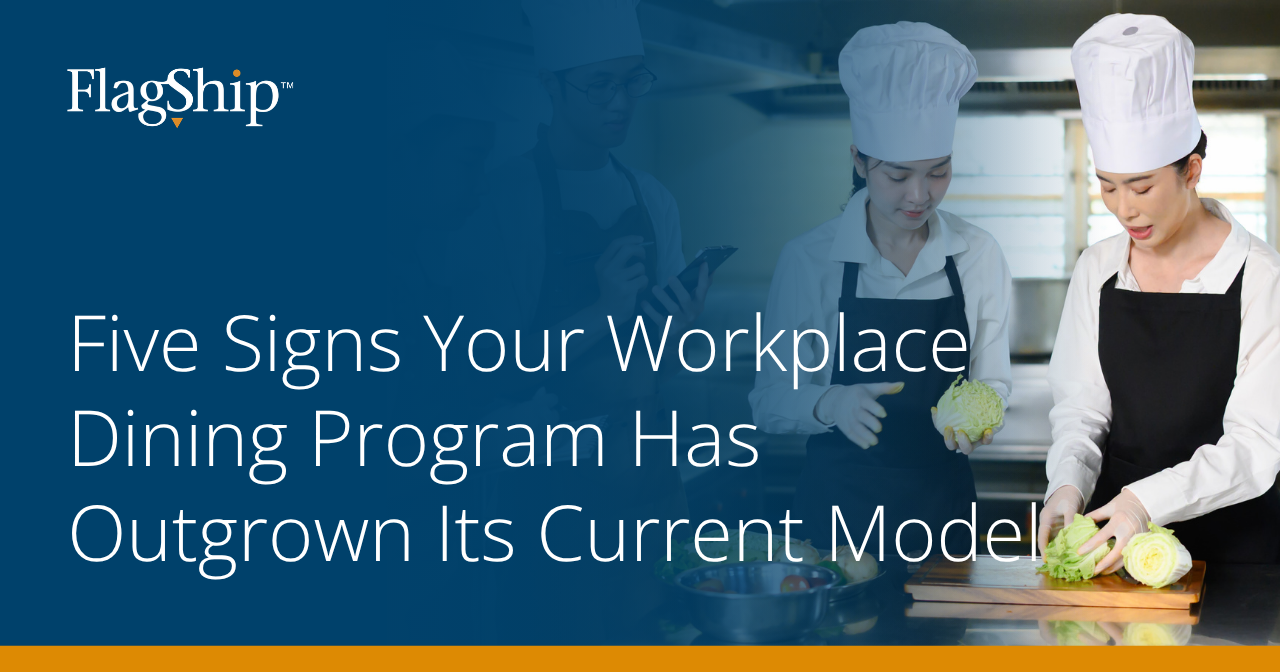
A workplace dining program can operate exactly as designed and still stop being the right fit. Teams grow, workplace schedules become less predictable, and employee expectations evolve. Yet dining programs often continue operating according to assumptions made years earlier about when people arrive, how many employees will be onsite, what they want to eat, and how they use the workplace.
That disconnect rarely shows up as one obvious problem. More often, it appears in small ways: a café that is packed on Tuesday but quiet on Friday, menus that receive less enthusiasm than they once did, rising costs that are difficult to explain, or employees regularly leaving campus for food.
Those signals are worth paying attention to. They can indicate that the workplace has evolved beyond the dining model supporting it.
Here are five signs it may be time to take a closer look.
## 1. Participation Has Changed Along With Your Workplace
One of the clearest ways to evaluate a workplace dining program is to look at participation in context. A café serving fewer meals than it did several years ago might appear to have an engagement problem, but the numbers mean very little without considering how many people are actually onsite. 
[Hybrid work](https://ifm.flagshipinc.com/redefining-corporate-dining) has made that comparison increasingly important. An office might have high attendance Tuesday through Thursday and significantly fewer employees onsite on Monday and Friday, while its dining program continues operating on essentially the same schedule throughout the week. Even on busy days, employees may use the café differently depending on meeting schedules, commute patterns, and nearby food options.
Looking at participation alongside occupancy and transaction data can reveal patterns that total sales figures often hide. Workplace leaders may find that demand is concentrated within a much shorter window, certain offerings consistently attract employees, or particular groups rarely use the program at all.
Those patterns provide a much stronger foundation for decisions about operating hours, menus, staffing, and service formats because they show how dining actually fits into the current workday.
## 2. Managing the Program Is Taking More Internal Time and Attention
[Workplace dining](https://www.ezcater.com/wp-content/uploads/2026/02/ezCater_Cafeteria_Report_2026.pdf) can become surprisingly difficult to manage as a program expands. A café that once served a fairly predictable lunch crowd may now be expected to accommodate fluctuating attendance, respond to a wider range of [dietary preferences](https://ifm.flagshipinc.com/accommodating-diverse-dietary-needs), offer more convenient service options, and contribute to the overall employee experience.
As expectations for workplace dining rise, management must rise to meet them. A model with clear operational ownership can absorb that complexity, rather than allowing it to spill into the workload of the teams it's meant to support.
## 3. Employees Regularly Choose Other Food Options
When employees have food available onsite but regularly leave for lunch or order delivery instead, those choices can reveal more than a preference for a particular restaurant. They can point to where the dining program no longer fits what people want from their workday, whether that means more variety, better value, greater convenience, or options that reflect changing tastes and dietary needs.
The answer doesn’t have to be a bigger menu. Continually adding choices can increase purchasing complexity and [food waste](https://ifm.flagshipinc.com/how-kitchens-can-reduce-waste) while doing little to improve participation. Looking at transaction patterns alongside employee feedback can provide a clearer picture of what people are seeking and where the current experience is falling short.
That insight can guide more intentional changes, from rotating concepts and seasonal menus to grab-and-go selections, pop-ups, and customizable meals.
## 4. Costs Are Increasing Without Clear Insight Into Why
Higher food and labor costs are part of today’s dining environment, but when expenses climb without a clear explanation, it becomes difficult to know where to make meaningful changes. A higher monthly total might reflect increased ingredient prices, changing participation, excess production, inefficient staffing, or a combination of factors that require very different responses.
Food waste is a good example of why that visibility matters. Preparing too much could point to unpredictable attendance, while consistently discarding certain dishes may signal that they aren't connecting with employees. Looking at waste alongside transactions, purchasing, and menu performance helps uncover the patterns behind the expense instead of treating each cost as an isolated problem.
With a clearer view of how those factors influence one another, leaders can make smarter decisions about where to adjust and where continued investment makes sense. If costs are becoming harder to manage and even harder to explain, the dining program may have outgrown the systems and oversight supporting it.
## 5. Your Workplace Is Asking More From Dining
Workplace dining has taken on a bigger role than providing a convenient place to grab lunch. As organizations look for ways to make time onsite more valuable, cafés and shared dining spaces have become places for employees to connect, continue conversations after meetings, and spend time together outside of their usual workspaces.
That broader role changes what employees and organizations need from a dining program. Catering may support team meetings and company events, flexible options can accommodate different schedules, and the café itself can become part of the [workplace experience](https://www.fooda.com/blog/fooda-2026-workplace-lunch-report). Programs designed around a predictable lunch rush can struggle when expectations extend beyond the traditional meal period.
If your organization is investing more in collaboration, connection, and the onsite experience, it’s worth considering whether dining has evolved alongside those priorities. The right model should reflect the role food plays in your workplace today and have the flexibility to keep evolving as those needs change.
## Build a Dining Program That Can Keep Up
Rethinking workplace dining is an opportunity to consider what the program should accomplish next. The strongest models have room to adjust as the organization grows, employee expectations change, and new priorities emerge, without requiring the entire experience to be reinvented each time.
That flexibility can take many forms, from menus and service formats that respond to demand to better visibility into performance and programming that keeps the experience fresh. What matters is creating a dining program that can make thoughtful adjustments over time while continuing to feel relevant to the people using it.
Flagship works with organizations to create workplace dining programs that reflect how their people work, gather, and eat today. **[Explore our culinary services](https://chatgpt.com/c/6a982bcd-c7ac-83e9-81a8-059f44e003e8#)** and see what’s possible for your workplace.
## Leave a Comment
### Subscribe Now! Stay up to date with the latest facility management tips and news.
## More Resources
[](https://ifm.flagshipinc.com/high-performing-culinary-teams)
### [What Sets High-Performing Culinary Teams Apart](https://ifm.flagshipinc.com/high-performing-culinary-teams)
[](https://ifm.flagshipinc.com/how-kitchens-can-reduce-waste)
### [Sustainability on the Menu: How Corporate Kitchens Can Reduce Waste](https://ifm.flagshipinc.com/how-kitchens-can-reduce-waste)
[](https://ifm.flagshipinc.com/recipe-for-excellence)
### [Staff Training & Development: The Recipe for Excellence](https://ifm.flagshipinc.com/recipe-for-excellence)
## Sign Up for Our Inside FM Blog

### [Services](https://flagshipinc.com/services/)
- [Facility Maintenance](https://flagshipinc.com/facility-maintenance/)
- [Janitorial Services](https://flagshipinc.com/janitorial-services/)
- [Lab Support Services](https://flagshipinc.com/lab-support-services/)
- [Managed IT Services](https://flagshipinc.com/managed-it-services/)
- [Culinary Services](https://flagshipinc.com/culinary-services/)
### Helpful Links
- [Job Listings](https://flagshipinc.wd5.myworkdayjobs.com/flagshipinc)
- [Request Scope of Work](https://flagshipinc.com/contact/scope-of-work/)
- [IT Customer Portal](https://flagshipinc.myportallogin.com/)
- [Flagship Culinary Services](https://flagshipculinaryservices.com/)
### Contact Us
[844-649-8884](tel:844-649-8884)
[info@FlagshipInc.com](mailto:info@flagshipinc.com)
Headquarters
[405 S Kimball Ave, Southlake, TX 76092](https://goo.gl/maps/ESpSET66qQ9zLzsS9)
© 2024 [Flagship Facility Services](https://flagshipinc.com) | [Privacy Policy](https://flagshipinc.com/privacy-policy/)
```json
{
"@context" : "https://schema.org",
"@id" : "https://ifm.flagshipinc.com/#organization",
"@type" : "Organization",
"logo" : "https://4850175.fs1.hubspotusercontent-na1.net/hubfs/4850175/Flagship-Facility-Services-F-Logo.jpg",
"name" : "Flagship Facility Services, Inc.",
"sameAs" : [ "https://www.facebook.com/FlagshipFacilityServices", "https://www.linkedin.com/company/flagship-facility-services-inc/", "https://www.youtube.com/channel/UCUZ_pkCHvdKTPr7htFIZkgg", "https://twitter.com/Flagship_Inc" ],
"url" : "https://ifm.flagshipinc.com/"
}
```
```json
{
"@context" : "http://schema.org",
"@type" : "BlogPosting",
"articleBody" : "A workplace dining program can operate exactly as designed and still stop being the right fit. Teams grow, workplace schedules become less predictable, and employee expectations evolve. Yet dining programs often continue operating according to assumptions made years earlier about when people arrive, how many employees will be onsite, what they want to eat, and how they use the workplace. That disconnect rarely shows up as one obvious problem. More often, it appears in small ways: a café that is packed on Tuesday but quiet on Friday, menus that receive less enthusiasm than they once did, rising costs that are difficult to explain, or employees regularly leaving campus for food. Those signals are worth paying attention to. They can indicate that the workplace has evolved beyond the dining model supporting it. Here are five signs it may be time to take a closer look. 1. Participation Has Changed Along With Your Workplace One of the clearest ways to evaluate a workplace dining program is to look at participation in context. A café serving fewer meals than it did several years ago might appear to have an engagement problem, but the numbers mean very little without considering how many people are actually onsite. Hybrid work has made that comparison increasingly important. An office might have high attendance Tuesday through Thursday and significantly fewer employees onsite on Monday and Friday, while its dining program continues operating on essentially the same schedule throughout the week. Even on busy days, employees may use the café differently depending on meeting schedules, commute patterns, and nearby food options. Looking at participation alongside occupancy and transaction data can reveal patterns that total sales figures often hide. Workplace leaders may find that demand is concentrated within a much shorter window, certain offerings consistently attract employees, or particular groups rarely use the program at all. Those patterns provide a much stronger foundation for decisions about operating hours, menus, staffing, and service formats because they show how dining actually fits into the current workday. 2. Managing the Program Is Taking More Internal Time and Attention Workplace dining can become surprisingly difficult to manage as a program expands. A café that once served a fairly predictable lunch crowd may now be expected to accommodate fluctuating attendance, respond to a wider range of dietary preferences, offer more convenient service options, and contribute to the overall employee experience. As expectations for workplace dining rise, management must rise to meet them. A model with clear operational ownership can absorb that complexity, rather than allowing it to spill into the workload of the teams it's meant to support. 3. Employees Regularly Choose Other Food Options When employees have food available onsite but regularly leave for lunch or order delivery instead, those choices can reveal more than a preference for a particular restaurant. They can point to where the dining program no longer fits what people want from their workday, whether that means more variety, better value, greater convenience, or options that reflect changing tastes and dietary needs. The answer doesnt have to be a bigger menu. Continually adding choices can increase purchasing complexity and food waste while doing little to improve participation. Looking at transaction patterns alongside employee feedback can provide a clearer picture of what people are seeking and where the current experience is falling short. That insight can guide more intentional changes, from rotating concepts and seasonal menus to grab-and-go selections, pop-ups, and customizable meals. 4. Costs Are Increasing Without Clear Insight Into Why Higher food and labor costs are part of todays dining environment, but when expenses climb without a clear explanation, it becomes difficult to know where to make meaningful changes. A higher monthly total might reflect increased ingredient prices, changing participation, excess production, inefficient staffing, or a combination of factors that require very different responses. Food waste is a good example of why that visibility matters. Preparing too much could point to unpredictable attendance, while consistently discarding certain dishes may signal that they aren't connecting with employees. Looking at waste alongside transactions, purchasing, and menu performance helps uncover the patterns behind the expense instead of treating each cost as an isolated problem. With a clearer view of how those factors influence one another, leaders can make smarter decisions about where to adjust and where continued investment makes sense. If costs are becoming harder to manage and even harder to explain, the dining program may have outgrown the systems and oversight supporting it. 5. Your Workplace Is Asking More From Dining Workplace dining has taken on a bigger role than providing a convenient place to grab lunch. As organizations look for ways to make time onsite more valuable, cafés and shared dining spaces have become places for employees to connect, continue conversations after meetings, and spend time together outside of their usual workspaces. That broader role changes what employees and organizations need from a dining program. Catering may support team meetings and company events, flexible options can accommodate different schedules, and the café itself can become part of the workplace experience. Programs designed around a predictable lunch rush can struggle when expectations extend beyond the traditional meal period. If your organization is investing more in collaboration, connection, and the onsite experience, its worth considering whether dining has evolved alongside those priorities. The right model should reflect the role food plays in your workplace today and have the flexibility to keep evolving as those needs change. Build a Dining Program That Can Keep Up Rethinking workplace dining is an opportunity to consider what the program should accomplish next. The strongest models have room to adjust as the organization grows, employee expectations change, and new priorities emerge, without requiring the entire experience to be reinvented each time. That flexibility can take many forms, from menus and service formats that respond to demand to better visibility into performance and programming that keeps the experience fresh. What matters is creating a dining program that can make thoughtful adjustments over time while continuing to feel relevant to the people using it. Flagship works with organizations to create workplace dining programs that reflect how their people work, gather, and eat today. Explore our culinary services and see whats possible for your workplace.",
"author" : {
"@type" : "Person",
"name" : "Ana Gibbs",
"url" : "https://ifm.flagshipinc.com/author/ana-gibbs"
},
"dateModified" : "2026-09-05T19:30:00+0000",
"datePublished" : "2026-09-05T19:30:00+0000",
"description" : "Learn five signs your workplace dining program has outgrown its current model and how evolving your approach can better meet employee and business needs.",
"headline" : "Five Signs Your Workplace Dining Program Has Outgrown Its Current Model",
"image" : {
"@type" : "ImageObject",
"url" : "https://4850175.fs1.hubspotusercontent-na1.net/hubfs/4850175/Culinary/Workplace-Culinary-Service-Meals.jpg"
},
"mainEntityOfPage" : {
"@id" : "https://ifm.flagshipinc.com/5-signs-to-update-culinary-program",
"@type" : "WebPage"
},
"publisher" : {
"@type" : "Organization",
"logo" : {
"@type" : "ImageObject",
"height" : 577,
"url" : "https://ifm.flagshipinc.com/hubfs/02-Flagship-Logo/Flagship-Facility-Services-F-Logo.jpg",
"width" : 577
},
"name" : "Flagship Facility Services, Inc."
}
}
```